Showing posts with label Cooking. Show all posts

6/22/2010

Review of Seduced by Bacon: Recipes & Lore about America's Favorite Indulgence (Hardcover)

I feel vindicated!I knew I loved bacon for several good reasons, and now we know that there are others out there just like me including the likes of James Beard & Julia Child.I love that the author educates and entertains us with the history of bacon.I'm a picture book lover and this book is loaded.Even if you can't cook (like me) you've got to try some of these recipes (the Bacon-Popped Popcorn is outrageously good).

Very cute Bacon Bits: "My favorite animal is bacon." - Fran Lebowitz
Five Yums Up!


Product Description
A celebration of bacon, filled with gorgeous photographs and seductive new recipes both savory and sweet.


Click Here to see more reviews about: Seduced by Bacon: Recipes & Lore about America's Favorite Indulgence (Hardcover)

6/07/2010

Review of Power Juices, Super Drinks: Quick, Delicious Recipes to Prevent & Reverse Disease (Paperback)

Power Juices Super Drinks is a wonderful book, full of useful information that is well- presented and easy to access. It is an inspiring treasure of information on healing foods and herbs, and their benefits for treating andpreventing diseases.
The material is presented clearly, withlightness and humor, which Steve Meyerwitz is known for! A major part ofthe book presents drinks, which may be teas, smoothies, citrus juices orother kinds of vegetable or fruit juices, for specific conditions. Thereare chapters on power drinks for the physical body, for the mind, and forlongevity. The longest chapter, called "Power drinks - MedicineChest", details nutritional therapies and recipes for 115 differenthealth disorders.
A tremendous resource on high power foods andherbs, is the chapter titled, "Nature's Finest Healing Foods andHerbs". It is this chapter which inspired me to start growing andeating broccoli sprouts, which contain fantastic amounts of valuablephytochemicals (plant derived substances). One type of phytochemicals isglucosinolates; Enzymes in the body convert these chemicals toisothiocyanates. One isothiocyanate, sulforaphane, is the strongest naturalinducer of our body's own protective enzymes against carcinogens. Thesesubstances have been shown to reduce the incidence, rate of development,and the size of tumors.Broccoli sprouts contain 20 to 50 times moresulforaphane than the average adult broccoli plant! In three days you canraise a crop of broccoli sprouts containing as much sulforaphane as an acreof broccoli would yield in a year! This chapter is a complete pharmacopoeiaof common foods and herbs, full of illuminating information.
Anothervery worthwhile chapter is titled, "Nutrient Sources". Thischapter lists vitamins, minerals, and enzymes, and provides food sourcesthat are loaded with them. Good sources of calories, carbohydrates, fatsand protein are also listed.
People of all nutritionalpersuasions will appreciate this book. It can provide tasty new healthydrinks and teas for those just starting their journey towards naturalhealing. For the already enthusiastic, it can educate and deepen theirunderstanding of many high-powered health foods.


Click Here to see more reviews about: Power Juices, Super Drinks: Quick, Delicious Recipes to Prevent & Reverse Disease (Paperback)

Review of The Food & Mood Cookbook: Recipes for Eating Well and Feeling Your Best (Paperback)

This cookbook is one of the best I've come by for people who have average to above average cooking experience and who are looking for very tasty, healthy meals.Everything I've made from this book has come out excellent and the ingredients are common to most cooks' kitchens, so you don't have to search extensively for exotic spices, etc.With some slight modifications, I have been able to improve a number of these recipes based on my individual tastes.I'm particularly fond of the soups and find that they are extremely quick and easy to make.

Enjoy and eat well!

Product Description
From the author of Food & Mood, recipes for dishes that can boost energy, soothe depression, and control cravings

Following the publication of her groundbreaking book Food & Mood, Elizabeth Somer became one of the nation's leading experts on the link between diet and feelings. Now she applies her insights into nutrition, weight, and emotion to the kitchen in this practical guide to eating well.

The Food & Mood Cookbook contains more than two hundred delicious and easy recipes for entrées, salads, side dishes, breads, beverages, and desserts. The varied dishes include
- Thai wraps
- cold curried chicken salad with cranberries
- plum-glazed chicken on skewers
- Cajun shrimp-and-corn bisque
- linguini with fresh tomatoes, capers, and lemon
- creamy, low-fat fudge
- lemon bundt cake with raspberry filling

Each recipe is briefly introduced with information about how these foods can affect emotions and energy, and the book is full of helpful charts and tips. The first cookbook devoted to the relationship between food and mood, Somer's book will appeal to anyone interested in eating to feel better.


Click Here to see more reviews about: The Food & Mood Cookbook: Recipes for Eating Well and Feeling Your Best (Paperback)

6/01/2010

Review of Living With Dietary Fructose Intolerance: A Guide to Managing your Life With this New Diagnosis (Paperback)

As a fellow sufferer of this condition, I was eager to read any tips and information I could find on this difficult to diagnose and almost impossible to eat around problem. My doctor gave me little to go on, and I've been scraping for info ever since.I belong to a couple online forums which have helped immensely, as those similiarly afflicted share what they've discovered with the groups, but that's about it.

What I'd hoped for in this book was an in depth view of what it's like to have the condition, ideas for eating, lists of sources of information, perhaps charts of fructose/sorbitol levels in different foods, and something beyond what my doctor first gave me when my test came back overwhelmingly positive.What I got was something hardly larger than a pamphlet, with little more than what I'd figured out on my own in the first week after my diagnosis.Oh yeah, and a bunch of recipes.After about 25 pages, this book is just a bunch of mainly milk-product-based recipes.These help me not one bit, as I am also lactose intolerant. (the author assumes many will also have a wheat allergy, not sure why, but ignores the possibility of lactose intolerance, which our forums have concluded are very common together) I didn't want a recipe book, but the bulk of this "book" is just that. :(

Good intentions, but the book is sadly quite basic.If you have food intolerances, try finding an MSN Forum for them first before buying anything.Real people interacting with you daily can provide the real information this author was trying to give.

Product Description
This guide is designed to help people struggling with Dietary Fructose Intolerance.It includes tips for adjusting your eating habits as well as recipes to help put the fun back into food.

Click Here to see more reviews about: Living With Dietary Fructose Intolerance: A Guide to Managing your Life With this New Diagnosis (Paperback)

Review of The Man Who Ate Everything (Paperback)

`The Man Who Ate Everything' is written by Jeffrey Steingarten, credited with being the food critic for `Vogue' magazine, belongs to a very exclusive club of American culinary columnists whose present leading light is James Villas and whose biggest star was M.F.K. Fisher. Oddly, I always had trouble appreciating Fisher's writing, while I simply can't get enough of either Villas or Steingarten. And, of these two, I am leaning to Steingarten if anyone asked me for a `good book on food'.

Steingarten's greatest strength as a writer to the amateur foodie is his ability to put himself in our position vis-à-vis the experts. He never pictures himself as an expert like Harold McGee on food science or Mario Batali on Italian cuisine or Nick Malgieri on baking or even like gifted neophyte Alton Brown on cooking technique. Unlike these professionals and teachers, Steingarten's shtick is how he gets there, not what he as learned after arriving. He is the culinary everyman's surrogate who can travel to Venice to visit Marcella Hazan for an education in cooking and eating Venetian seafood and have cooking expert Marian Cunningham fly in to teach him how to make a perfect piecrust.

Steingarten's introduction which gives an explanation of the book's title makes one seriously wonder what our dear reporter did before he was tapped to write on food for `Vogue'. His list of culinary aversions could fill several major cookbooks, and have. One wonders if Steingarten had any food related assignment before he embarked on reforming his tastes to fit his `Vogue' assignment. While I sometimes fear that my sense of taste is remarkably dull compared to those of talented chefs, my compensation is that there is literally nothing I will not eat and there are very few things I will avoid. In contrast, pre-Vogue Steingarten had aversions to kimchi, dill, swordfish, anchovies, miso, falafel, clams, and all Greek food. The introductory essay is the story of how Steingarten overcame all of these aversions except to the one for eating insects.

This first essay is a perfect exemplary of Steingarten's style. It may have been easier to say these are the aversions he overcame, but it is much more fun to describe how he overcame them. This is not to say that the book is all about the tourist to the banal. Steingarten is well prepared for most of these trips and we, along with the author, learn much in the course of his trials and errors.

While this is not a book about food science a la Robert Wolke's `What Einstein Told His Chef', there is a lot of scientific method afoot in many of the essays. My favorite is Steingarten's excursion into the world of the perfect piecrust. As dedicated `Good Eats' fans know from Alton's episode on pie crusts, the building of the perfect pie crust involves resolving two contrary properties, flakiness and tenderness while doing battle with properties of wheat flour gluten which work so well when creating bread, but which, it is said, cause all sorts of undesirable characteristics in pie crusts, known to the French as `pate brisee'. Before expert Cunningham flies in from California, Steingarten surveys the entire body of writing in English on what makes a good pie crust and comes up with a perfect procedure involving a whiz of the flour in a food processor with half the shortening followed by a careful folding in of the remaining shortening and a hint of water to bring everything together. The result is a disaster.

The lesson from this attempt is that that villain gluten is not so irrelevant to a pastry crust as some writers would have you believe. When Madame Cunningham arrives on the scene, she whips up a dandy piecrust in about as much time as it may take you to write about it. Ms. Cunningham then flies off before Herr Steingarten has gotten everything about her technique down on paper. This leads to many transcontinental telephone calls while our Jeffrey perfects his fingering with the dough and gets everything down in black and white. The really ironic outcome of this exercise and the resulting essay is that Steingarten's description of the complete procedure takes SEVEN (7) full pages. And, that is with a recipe using shortening rather than my preferred butter. I may not follow his procedure, but I certainly enjoyed his journey needed to get him to that result.

Like Villas, it is quite likely that you will find much in Steingarten's writing with which to disagree. This is part of the fun. For example, he can find little to like about roasted turkey, the national American holiday meal. Since `Gourmet' and `Bon Appetit' and Nigella Lawson (among others) are still cooking up new recipes for the maligned bird, I suspect Steingarten has not talked anyone out of eating their gigantic poultry, but it is certainly fun listening to him rant about it and, as Ms. Lawson so aptly points out, tradition may be as much or more important than the turkey's culinary virtues.

As we are approaching the dark evenings of winter, I definitely recommend this book as a classic of American culinary writing. It is our Yankee answer to B'rer Villas' writing about food from the Southern perspective. As an essayist, Steingarten has the eye and mind of Stephen Jay Gould and the wit and wordsmithing (and similarly strong prejudices) of H. L. Menchen, my two favorite American essayists.

Highly recommended.


Click Here to see more reviews about: The Man Who Ate Everything (Paperback)

5/13/2010

Review of Genetic Nutritioneering (Paperback)

The focus on this book is to bring the latest research on how to create from a person's genetic template the best health outcomes as they age using personalized nutrition and lifestyle tailoring. The book is science-basedfrom both the clinical research experiences of the author in the FunctionalMedicine Research Center and from the hundreds of scientific studies fromother researchers cited in the extensive bibliography. This is a "howto" book as much as a description of when, why and where medicine willbe changing to become "personalized medicine" in the 21stcentury.

Product Description
The far-ranging Human Genome Project is producing a breathtaking revolution in health, raising the prospect of averting hereditary "destined" diseases by modifying the expression of genetic traits. Researchers have identified many genes implicated in specific diseases such as cancer, diabetes, and arthritis and have realized that unfavorable genetic messages can be improved by changes in lifestyle, diet, and environment. Genetic Nutrioneering uses detailed questionnaires to show how to "read" genetic characteristics and how specific foods and nutrients can be used to improve gene expression to slow biological aging and reduce the risk of age-related diseases. It covers the use of gene expression for preventing heart disease, cancer, arthritis, and hormone-related problems, and improving immune and nervous system function. A comprehensive nutritional program presents specific foods, supplements, and diet plans that apply these concepts to an individual's needs.

Click Here to see more reviews about: Genetic Nutritioneering (Paperback)

5/08/2010

Review of 101 Reasons Why I'm A Vegetarian (Paperback)

I just finished reading Ms. Rice's 101 Reasons Why I'm a Vegetarian, and I simply have been bowled over. Reason after reason, the information the author brings forth is unrelenting and, no-less, devastating. This is up there as one the most far-reaching indictments of the meat-eating lifestyle to date.

So much of this material was absolutely new to me, and I pride myself on being an informed vegan. It would be pretty tough for any meat eater to remain so after reading this book. If you read it, you will be transformed.

Despite the obvious fact that Ms. Rice shares the philosophy of your most ardent vegan advocate, the writing style is understated, which is perhaps what gives the information its power. In the majority of cases Ms. Rice's facts come from conventional sources (the USDA, the EPA, The New York Times, The Economist, agricultural colleges, etc.), which, by the way, are copiously referenced. I figure there are perhaps 1,500 citations in the book. I could not, of course, look at every one, but it was nice to know they were always there to back up the facts. I did look up a few with Google searches. In those cases I
was at once brought into a world of key experts at the forefronts of their fields. Furthermore, the 13-page index appears to allow readers a good chance at cross referencing at any point. Both the index and the reference pages were interesting browse-reads in themselves.

Here is a book that should probably be on the shelf of every vegan or vegetarian alive. There, this book offers the meat-free the constant assurance that each had made the best decision of his or her life.

My only complaint with the book was that the author did not let loose more often. I got the feeling Ms. Rice's editors reigned in a more flamboyant style, a style that seeps through the cracks all too infrequently.

In the end, at risk of repeating myself, if you're a vegetarian or vegan, here is your ultimate vindication. If you're a meat eater, you may want to consider yourself duly put on the hot seat.


Product Description
For many years, Pamela Rice, president of the Vivavegie Society in New York City, has produced the pamphlet 101 Reasons Why I'm a Vegetarian, known to all who have read it as "The Mighty Convincer." The pamphlet offers in bite-sized pieces the many human health, animal welfare/rights, and environmental reasons why people are choosing a meatless diet.
Now Pamela has written an expanded and fully resourced book-length version of 101 Reasons Why I'm a Vegetarian, filling out the details of her argument and providing up-to-date information, but maintaining her engaging and informed style. She covers everything from the conditions for animals on factory farms to disappearing fish stocks, lagoons of animal waste, high incidences of colon cancer and other diseases, and other information from industry periodicals, newspapers, magazines, Web sites, and other less readily available sources.
A work of prodigious scholarship and dedication, written with wit and skill, 101 Reasons Why I'm a Vegetarian is sure to become the handy reference work for vegetarians who want to give their meat-eating friends one book that explains why they do what they do, and for meat-eaters who want to understand all the arguments for a meatless diet.

Click Here to see more reviews about: 101 Reasons Why I'm A Vegetarian (Paperback)

5/01/2010

Review of What's Cooking : Low Fat (What's Cooking Series) (Hardcover)

This is one of my favorite cookbooks! Every recipe I've tried is fabulous and I've made some of them so often that I have them memorized.I really love the Pan-cooked Pork Medallions w/ Apples & Cider, Strawberry Roulade, Red Roast Pork w/ Bell Peppers (on the cover) and the Broiled Chicken w/ Lemon & Honey. The Red Fruits w/ Foaming Sauce is very simple to make and very impressive to dinner guests.
The recipes are simple and use ingredients that you can find at any grocery store. Most recipes are no more than 5 or 6 steps and include color photos of some of the steps--how to cut the meat, folding in ingredients, etc. I love this because I'm a visual person and I like to see what I need to do instead of just reading about it.
There is also a beautiful, full-page, color picture of the final product FOR EACH RECIPE!This is wonderful because you have an idea of what the finished product should look like and how you can present it. I highly recommend this cookbook! It proves that low fat does not mean no taste or flavor!

Product Description
This inspirational and comprehensive cookbook offers the home chef a wide array of low-cholesterol recipes that are both healthy and flavorful.Chapters include ideas for soups and starters, meat and poultry, fish and shellfish, vegetable and salads, and baking and desserts. Balances exciting new ingredients and recipes with a wide selection of traditional favorites.Includes 120 easy-to-follow recipes, each illustrated with full-page color photographs.The What's Cooking series also includes: Baking, Barbecue, Chicken, Chinese, Chocolate, Indian, Italian, Pasta, and Vegetarian.

Click Here to see more reviews about: What's Cooking : Low Fat (What's Cooking Series) (Hardcover)

4/30/2010

Review of Savvy Eating for the Whole Family: Whole Foods, Whole Family, Whole Life (Capital's Savvy) (Capital Ideas) (Paperback)

FINALLY, a guide to healthy eating that is NOT a fad diet book! Dr. Kocsis writes in a warm, friendly, everyday style that makes it seems as if she is right there coaching you on how to adopt her simple approach to eating better. Her explanations of nutritional facts and functions are straightforward and enlightening. And her good humor and commonsense attitude give us permission to be flexible in incorporating her advice. You get the sense that she would not scold you if you succumbed to a craving for an occasional "naughty" food. In other words, her down-to-earth approach lays out doable methods for painlessly altering your lifestyle and eating habits. As a bonus, the recipes Dr. Kocsis shares are delicious and easy to prepare. Finally, although the title references families, this book is not just for families with young children; rather, it offers cogent, germane information and advice for all people, younger and older alike.

Product Description
"Savvy Eating for the Whole Family" is a guidebook for those who are confused and frustrated by the plethora of diet books on the market - fad diets that ultimately don't work long-term and that leave us fatter and less healthy. Clearly there is something wrong with the way Americans eat. Diet-influenced diseases like cancer, heart disease and diabetes plague our society at increasing rates despite advances in detection and treatment.To combat the diet gimmicks and junk-food habits, Dr. Kocsis has developed a safe, easy-to-follow action plan to get families, from babies to adults, on the path to healthier eating. In "Savvy Eating for the Whole Family," Dr. Kocsis :Traces the development of bad eating habitsShows us how to foster better eating habits in our children and how to avoid family food warsDispels myths and explains the current concepts of nutrition in plain termsHelps the reader learn to choose whole grains in moderation, fruits and vegetables in abundance, the right kinds of proteins, and plenty of healthy fatsGives practical advice on how to make the necessary dietary changes painlesslyPresents solid, credible nutrition information without confusing charts and calculationsAddresses the needs of the whole family whether an individual's goal is to lose weight or eat healthierIncludes meal plans with more than 100 original recipesTABLE OF CONTENTS:Savvy Eating for the Whole Family: Whole Foods, Whole Family, Whole LifePart One: What You Need to KnowChapter 1: A Savvy Approach to EatingChapter 2: The Shape We're InChapter 3: The Development of Savvy Eating: Baby StepsChapter 4: Kid Stuff: Avoiding food wars and establishing good lifetime eating habitsChapter 5: TeensChapter 6: Particular needs of women, men and the elderlyChapter 7: Nothing but the Truth: Tracking what you really put into your stomachChapter 8: Facts about Fats: Some good news at lastChapter 9: The Skinny on Carbohydrates: Understanding glycemic loadChapter 10: Grandma Was Right: Eat your fruits and veggiesChapter 11: The Power of ProteinChapter 12: Developing a Sense of PortionChapter 13: Snacks that Don't Come in Bags or WrappersChapter 14: Why Water Is Still the Best Drink in the HouseChapter 15: Menu Management: Eating outChapter 16: The Losing Battle: How to slim down by making your hormones work for youChapter 17: Here Today, Gone Tomorrow: Why fad diets have a short shelf lifeChapter 18: Stocking the Pantry: Being prepared makes good eating easyPart Two: Incorporating Satisfying Foods into Your LifeChapter 19: What's for Dinner? 30 days of meal plans and recipesChapter 20: Eating Your Veggies: Soups, salads, salsas and other painless ways to enjoy nature's bountyChapter 21: Good Fats, Good Proteins: Shortcuts to surprisingly healthful foodsChapter 22: Great Grains, Better Breads and Diet-friendly DessertsAppendixBibliography

Click Here to see more reviews about: Savvy Eating for the Whole Family: Whole Foods, Whole Family, Whole Life (Capital's Savvy) (Capital Ideas) (Paperback)

4/28/2010

Review of The Sugar Control Bible and Cookbook (Paperback)

My doctor introduced me to this way of eating by having me try the two week plan.I had my reservations and all the reasons why I could not follow it.but I said I'd try it for two weeks--but no more.I began eating the Sugar Control Program three months ago and will never go back to my old way of eating.I have so much more energy now and I like the food.I'm never hungry and grocery shopping is so very easy:I shop on the outside paramenters of the grocery store.In otherwords, I eat all fresh food now.
I bought the book to learn more about why this works and found it to be very helpful in learning how the body handles nutrients and what the body needs to function properly.Ms Paltis also gives some background on TBM (Total BOdy modification) and using functional physiology in learning how the body works.This book is a great guide and reference if you want to learn improved ways of functioning.

Product Description
Complete nutrition guide to a pleasurable and satisfying program that revitalizes your health by getting you off the sugar/refined foods roller coaster.This prescription for health uses higher protein, low glycemic foods and healthy fats for greater energy, clearer thinking, balanced emotions, and a stronger immune system.How the popular high-carbohydrate/low-fat diets have been making you sick and what to do about it.

Click Here to see more reviews about: The Sugar Control Bible and Cookbook (Paperback)

4/27/2010

Review of Full Moon Feast: Food and the Hunger for Connection (Paperback)

This book is a personal re-examination of food--what we eat, and why we eat it. In this book, Prentice examines food customs and traditions, searching for their physiological and environmental rationale.Her primary observation about food traditions is that they are strictly tied to the seasons, and thus the continual year-round availability of our foodstuffs has resulted in loss of much traditional knowledge about what is good for us and what isn't.In recognition of the essential seasonality of foods, Prentice organizes this book into the thirteen moons that make up the year, from the famine moon, to the sap moon, from the egg moon to the corn moon, from the blood moon to the wolf moon.

Each chapter describes the ecology that led to the association between a particular food item and a specific time of the year.In the chapters, Prentice discusses the nutritional contributions of the featured food items, and how her relationship with that food has changed over the years.For example, she explains how she used to avoid milk and other dairy products, but now relishes them as a gift of love from Mother Earth.Each chapter also includes recipes of the season, ranging from exotic dishes of non-Western food cultures, like Cardamom and Jaggery pudding, to simple directions for lost arts, such as rendering pork, or making homemade yogurt and sauerkraut.

Prentice was once a strict vegan, who for health reasons, eventually found herself drawn to a diet which includes animal products, but not the products of industrial agriculture. There is much that vegetarians and vegans would not like in Prentice's essays, since she explains how her 10 years of vegetarianism were not healthy for her.Having had the same experience myself after being a vegetarian for 20 years, I can appreciate the wisdom in what she writes.While vegetarian diets work well for some, they are not appropriate for everybody.But at the same time, diets that include the consumption of industrially produced and processed animal products do nobody any good.We need to be willing to recognize our relation and responsibilities to the animals that we consume.

I first heard of this book when I attended a Vermont Localvore potluck at which Prentice was the invited guest chef.I was deeply offended then at her attitude, when she announced she was going to make a salad using a recipe from her book, but lamented the lack of local artichokes or olive oil.`How could such a person be associated with local cooking,' I wondered, `if she doesn't even have the sense to find out what the best local ingredients are and celebrate them, instead of parading the products of another region in front of us?'I figured that a seasonal local cookbook written by a national author would be a worthless concept.Fortunately, that's not what this book attempts--instead the book is much more about rediscovering our connection to food than about specific local recipes.

Although she has become famous for leading the concept of eating foods only from one's local region, what she urges here is really an appreciation for the products of small farms.Thus, instead of simply cheering on local food, Prentice argues in this book that our industrial agriculture system has torn us away from one of the most essential of human traits, our relationship to the food that nourishes us.Instead of following diets of avoidance, Prentice advocates recognizing the meaning that each item of food brings to our lives, and using food to re-establish our connection to the land.Indeed, the only foods that Prentice avoids are those heavily processed products of industrial agriculture: refined sugar, white flour, and pre-packaged extruded junk.Although the book contains a few recipes, it is not a cookbook, but rather a wake-up call: "Our poor diet is at least partly a physical manifestation of a spiritual decay," together with some suggestions of how we can begin the journey back to healthy eating.

Product Description
In Full Moon Feast , accomplished chef and passionate food activist Jessica Prentice champions locally grown, humanely raised, nutrient-rich foods and traditional cooking methods. The book follows the thirteen lunar cycles of an agrarian year, from the midwinter Hunger Moon and the springtime sweetness of the Sap Moon to the bounty of the Moon When Salmon Return to Earth in autumn. Each chapter includes recipes that display the richly satisfying flavors of foods tied to the ancient rhythm of the seasons.
Prentice decries our modern food culture: megafarms and factories, the chemically processed ghosts of real foods in our diets, and the suffering-physical, emotional, cultural, communal, and spiritual-born of a disconnect from our food sources. She laments the system that is poisoning our bodies and our communities.
But Full Moon Feast is a celebration, not a dirge. Prentice has emerged from her own early struggles with food to offer health, nourishment, and fulfillment to her readers. She recounts her relationships with local farmers alongside ancient harvest legends and methods of food preparation from indigenous cultures around the world.
Combining the radical nutrition of Sally Fallon's Nourishing Traditions, keen agri-political acumen, and a spiritual sensibility that draws from indigenous as well as Western traditions, Full Moon Feast is a call to reconnect to our food, our land, and each other.

Click Here to see more reviews about: Full Moon Feast: Food and the Hunger for Connection (Paperback)

4/24/2010

Review of Ann Louise Gittleman's Eat Fat, Lose Weight Cookbook (Paperback)

good recipes; good information.I don't know that you would really lose weight with this cookbook though unless you really follow it.

Product Description
Ann Louise Gittleman's Eat Fat, Lose Weight Cookbook--the companion to the bestselling Eat Fat, Lose Weight--includes 150 recipes for delicious dishes which will not only speed up the metabolism but will also help lower the risk of heart attacks, Alzheimer's disease, arthritis, breast cancer, even PMS. The robust flavors and heady aromas of the recipes included in this groundbreaking book will delight the palate and put the pleasure back into healthy eating.

Click Here to see more reviews about: Ann Louise Gittleman's Eat Fat, Lose Weight Cookbook (Paperback)

4/19/2010

Review of Whole Food Facts: The Complete Reference Guide (Paperback)

I really enjoyed reading Whole Food Facts- The Complete Reference Guide by Evelyn Roehl. This is a very well written and informative book.It speaks to Dairy Products, Fats and Oils, Fruits, Grains, Legumes, Nuts and Seeds, Sweeteners, Vegetables, Other Foods, Types of Diets, and the Value of Nutrients and Food Supplements.It explains WHAT they are, HOW your body uses them, How Nutritious are the Specific Foods.Sometimes the Book explains how to USE and STORE certain types of food and explaines the different types of a certain food, such as Fats and Oils.It further addresses the Vitamins found in each type if food and some additatives.It provides a guide for how long you can store fruit and the peak season of availability of the fruit.Toward the end, there is a section on Vitamins and their uses in the body that I found extremely interesting.It also recommended amounts needed for good health.I am very glad I bought this book as it is a great reference book.It even tells me how to prepare a few foods- not receipes, just preparation.


Click Here to see more reviews about: Whole Food Facts: The Complete Reference Guide (Paperback)

4/18/2010

Review of Crazy Plates: Low-Fat Food So Good, You'll Swear It's Bad for You! (Paperback)

I just received CRAZY PLATES two days ago.Afer trying just two recipes, I am SOLD on this book!The food is great, it is easy to prepare, and the whole family loves it! I am on Weight Watchers and my husband is adiabetic.The nutritional information included with each recipe makeschoosing good-for-us foods a breeze.The Berried Treasure muffins arealready a hit at our house with just one batch! I collect cookbooks, andthis one is bound to become one of my most used.You can be sure I will bebuying LOONEYSPOONS, also by the Podleski sisters, too


Click Here to see more reviews about: Crazy Plates: Low-Fat Food So Good, You'll Swear It's Bad for You! (Paperback)

4/16/2010

Review of American Heart Association Around the World Cookbook: Low-Fat Recipes with International Flavor (Plastic Comb)

A comment on my earlier review: I was going to use the author's recipe for paella until I read it more carefully and then I found that most of it went against the grain so I didn't. I understand that recipes for paella abound and that hers may be to other people's taste but it wasn't to mine. In the name of fat reduction she suggests that if the reader cannot get Spanish chorizo, but only Mexican chorizo, the reader use "light smoked sausage" (p. 154) because Mexican chorizo is "swimming in fat" (p. 144). While it is true that chorizo is quite high in fat, there is only so much of it in any particular serving and it is absolutely indispensable. Paella would just not be paella without it! Furthermore, she uses 2 boneless, skinless chicken breast halves and 1/2 pound boneless pork loin chops for 8 servings, in addition to 1/2 pound large shrimp. 8 fresh clams, 8 fresh mussles (understand that this is 1/4 chicken breast half, 1 oz. of shrimp, 1 mussel and 1 clam per serving and 1 oz. pork chops), and artichoke hearts, etc. (p. 144-145), and she says to cut the chicken and the pork into CUBES! While this may be fine for some, I could not do it this way. I omitted the pork entirely, and used what I prefer: bone-inchicken thighs with skin (I would use 1 per serving)), and I left them whole. Also, I omitted the artichoke hearts which I didn't think would work well enough, and I used more saffron than she says is necessary and no matter what recipe you use, I suggest that you use saffron to taste. Also, I would not (although one could) cook the chorizo in the stockpot with the rice-I panfry it. If the way I make it increases the fat content to some extent over the way she does it (her recipe has 7 grams of Total Fat and 2 grams of Saturated Fat per serving-but at 5' 3 1/2 inches tall, I know fromthe website of Dr. C. Everett Koop that I can have 50 grams of fat per day, so I don't know what the fuss is about), I think that that is vastly preferable, especially since one does not have paella every day. I am wondering what to do about the other recipes in the book about which I know nothing...

Product Description
Bringing together heart-healthy, delicious recipes with international flair, the American Heart Association Around the World Cookbook takes you on a guided tour of the best dishes of many of the world's cuisines. By adapting the best-loved dishes from Italy, France, Asia, Greece, the Caribbean, Germany, the Middle East, and more, the AHA lets you savor the delicious flavor of old favorites and innovative, exotic dishes without all the fat, cholesterol, sodium, and calories that can sabotage your health. Charming illustrations, lots of cook's tips, and two glorious, full-color photo sections will help you bring these wonderful recipes to life. Special sections on planning and shopping for meals, dining out, cooking healthfully, and putting together menus will help you get the most out of your global culinary tour.

Whether you're looking for breakfast alternatives, tasty soups and salads, hearty entrees, special holiday appetizers, or decadent desserts, you'll find a wide variety or tasty options sure to delight.

With this latest offering from the bestselling AHA cookbook library, you can enjoy palate-pleasing fettuccine Alfredo, guilt-free mushroom strudel, delightful cannoli cream, and delectable honey-rum mango sauce: proof that good taste and good health can go together.


Click Here to see more reviews about: American Heart Association Around the World Cookbook: Low-Fat Recipes with International Flavor (Plastic Comb)

4/02/2010

Review of No More Bull!: The Mad Cowboy Targets America's Worst Enemy: Our Diet (Paperback)

The Mad Cowboy rides again! The long-awaited continuation of his rants and raves on veganism and politics comes through as madcap as ever but with a smart edge that promises to leave a trail of vegan converts. We all know someone who went vegetarian after reading Diet for a New America, and Howard Lyman is threatening to become the next John Robbins, with an endearing smile and naughty wink. No More Bull is a Howard Lyman hit.

The infamous cattle rancher-turned-vegan has a no-holds-barred writing style that occasionally smacks of his mischievous speaking style. I envy his matter-of-fact manner and I'd hate to find myself debating him, but I count on him to tell it to me straight. As a fan familiar with his speaking style, I often hear his co-writers in the pages of No More Bull, as if two others are sitting with Howard and me over coffee discussing veganism. Their writing styles gel together well.

Lyman doesn't mince words when he addresses meat-eaters in the chapter "Message for My Meat-Eating Friends":

"To state the obvious: vegetarians live longer than meat eaters simply and solely because we do not consume the filthy, fatty, disease-ridden, decaying flesh of animals. (Forgive me for being so blunt, but there is no such thing as a clean, lean form of meat, and no other honest way to describe meat - even if you buy it "organic," or blessed by rabbis, or hunt it down yourself.) Vegans live longer still because we avoid as well the fatty, hormone-rich, cholesterol-ridden by-products of the lactation of other major mammals."

Simple as that, my friends.

His call to arms comes in the next chapter - "Message for My Fellow Vegetarians and Vegans." Referring to milk as "liquid meat," Lyman asks "for those of you who are still merely vegetarian and not yet vegan, I ask, what in heaven's name are you waiting for?" He's endearing, nonetheless, not obnoxious, though some vegetarians might take offense if they understandably feel singled out.

Lyman pushes the point that herbivores shouldn't feel like they're saving the world through their food choices. It's not good enough to hide out and have meals with other vegans. Talk to children, talk to schools, invite omnivores over for vegan dinners, question authority, stop preaching. "You're better off serving the seitan stew than preaching the gospel of animal rights."

Unlike many recent books on veganism and health, Lyman doesn't discuss the tragic conditions of factory farmed animals. "People either feel for animals or they don't; while I believe they ought not be shielded from seeing what a slaughterhouse looks like, and the conditions in which their 'food' animals exist, I also think it serves no purpose to browbeat them over animal rights. If you must browbeat them, do so about their health."

Luckily, there are many voices out there describing slaughterhouse conditions. I'd personally eat white rice and cauliflower for every meal if it meant helping to prevent animals from experiencing such suffering. To me, health reasons pale in comparison to animal rights issues in my own personal vegan path. Lyman trusts that the average person is much more focused on their health, and he's left the environment, disease and political manipulation outside his scope.

Half of the 200-page No More Bull is recipes - great recipes from the likes of Neal Barnard, T. Colin Campbell and Frances Moore Lappe', among many others. I enjoyed Bryanna Grogan's Vegetarian "Meat Loaf" and Joanna Samorow-Merzer's Stuffed Eggplant, but the main event of this book isn't the star-studded recipe section. The highlight is Howard's convincing words.

He has seen the insanity of the meat and dairy industries first-hand. As a fourth-generation dairy farmer and cattle rancher, he's one of environmentalists' greatest resources in terms of exposing the truth of chemical fertilizer use, health side-effects of meat and dairy consumption, and the political nightmare we've become caught in like quick sand. In the genre of bold, inspirational books about veganism, Lyman's voice can't be ignored.

John Robbins' review of No More Bull encourages, "If you read this book, several things will happen. There will be more health in your life. There will be more joy in your life." Indeed, in today's sad, troubled world we could all use Lyman's humorous, honest, unapologetic words. --Caity McCardell


Click Here to see more reviews about: No More Bull!: The Mad Cowboy Targets America's Worst Enemy: Our Diet (Paperback)

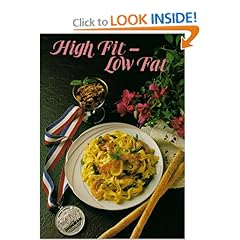
Review of High Fit-Low Fat (Plastic Comb)

I own both of the High Fit - Low Fat cookbooks (regular and vegetarian).The books are good for both novice and experienced chefs.Although I own many cookbooks, I do the majority of my cooking from the High Fit - Low Fatrecipes.
The recipes call for healthy ingredients.The recipes arecreated in such a way that my family can't tell the healthy version fromthe less-than-healthy version, except that mine tastes better.Cooking hasnever been so easy and nutritious.
The cookbooks make great gifts too (Ibought 10 as gifts for family members)!

Product Description
A collection of healthful recipes featuring the use offresh, whole ingredients. Techniques and methods of low-fat cookingare introduced with a focus on decreasing saturated fat andcholesterol and increasing dietary fiber in the diet.

Click Here to see more reviews about: High Fit-Low Fat (Plastic Comb)

3/30/2010

Review of Conscious Eating (Paperback)

This book is one of the best health books I've ever read, no question about it.It combines pretty much every diet fad you've ever heard about into a raw, living food diet.
In this book, Cousens teaches us how to follow the Ayurvedic principles through a 80-90% raw food diet.He also teaches us how to individualize our diets for our metabolic body types.This is one of the only books I know that teaches how to individualize diet for a vegetarian.
The book covers religion, meditation, toxins in our environment, and has a nice living foods recipe section in the back of the book.The nice thing about it, is that with the recipes, he doesn't try to offer dishes that are similiar to those which are cooked.I see a lot of vegetarian recipe books doing that."Try our delicious all vegan pizza!" and of course, it tastes no better than a branch off of the Maple tree in my back yard.These recipes offer new tastes.
I like a particular section in the book where Cousens tries to explain the logic behind why people think he looks much more unhealthy now than when he did when he was a bulky college football player.We live in such an obesce society, that someone of a healthy weight appears too slim, or unhealthy.Because Cousens doesn't have a pot belly, and sagging male breasts, many people say he looks "thin and puny".This book teaches us thatthrough living foods, we can sculpt and shape our bodies pretty much any way we'd like.He chooses not to be muscular anymore, because he feels he has no need for 30 extra pounds of muscle. Steven Arlin on the other hand, is 230 lbs, and likes to feel big and strong.
All in all, this book takes you on a journey through the fascinating world of raw, living foods.It could change your way of thinking.


Click Here to see more reviews about: Conscious Eating (Paperback)

3/27/2010

Review of The Healing Foods: The Ultimate Authority on the Creative Power of Nutrition (Mass Market Paperback)

Simple, alphabetized list of foods, illnesses and remedies. Not very detailed, but rather like a pocket-book reference point.

Product Description
The Knopf Canada Book of Healing Foods is a guide for everyday living, and the fastest way to understand how the foods you eat can help to heal, and help you remain healthy.

There's a healing food for almost every common health problem - from colds, stress, insomnia and high blood pressure to more complicated illnesses - and most are as close as your local grocer. Healing Foods is an indispensable guide to choosing the best foods for an active life - a bright and friendly market of knowledge that makes the time you spend at the dinner table an investment in spirited living.

In beautiful colour, it also highlights health-giving foods and their nutritional and medicinal benefits. Information on buying, storing and preparing healing foods is clearly listed, and each item - from pineapples and chilies to almonds and apricots - is linked to delicious, easy-to-prepare recipes from around the world.

A questionnaire helps you assess your diet and general health to pinpoint problem areas, while a section on ailments and treatments makes it easy to address individual concerns. Fully indexed, illustrated throughout in full colour, Healing Foods is a goldmine of information and recipes to treasure.

Click Here to see more reviews about: The Healing Foods: The Ultimate Authority on the Creative Power of Nutrition (Mass Market Paperback)

3/24/2010

Review of Death to Diabetes: The Six Stages of Type 2 Diabetes Control & Reversal (Version 1.0) (Paperback)

It is interesting that two of the most helpful books on diabetes that I have found - this one and "Diabetes Solution: The Complete Guide to Achieving Normal Blood Sugars" by Dr. Bernstein - were both written by diabetics and fellow engineers rather than by doctors. However, Dr. Bernstein is an engineer who went to medical school and became a doctor. Often it seems that those non-patients from the medical profession are stubbornly wed to what they have been taught is the truth about this disease regardless of outcome. Sometimes I wonder if it is the result of traditional medical training, based more on memorization than systematic problem solving, that causes this frustrating result.

In this book, the author goes over how he went from someone who went into a diabetic coma with a blood glucose of 1337 (80-120 is normal) who had been subsisting on processed food to someone who has slimmed down, learned to eat right, and now has a blood sugar in the 80-110 range. He talks about how the foods diabetics are not discouraged to eat by the medical profession such as potatoes, bananas, cereal, and many dairy products cause the blood sugar to spike and worsen glucose control. Instead, he recommends that you snack on veggies such as brussel sprouts. He even talks about his "power breakfast" - brussel sprouts with olive oil, salmon, and water. He determined what worked for him the same as Dr. Bernstein - by meticulous record keeping of his blood glucose after ingesting various foods.

The author also talks about other issues that will be more familiar such as exercise and record keeping. Also, he incorporates a spiritual component into his healing process that includes prayer and inspirational quotes. Finally, he talks about various nutritional supplements such as cinnamon, gymnema sylvestre, and bitter melon, and how each might be helpful in blood glucose control.

The reason I am only giving this book four stars is that, although everyone will be helped by reading this book and following its advice, not everyone will be, for all intents and purposes, "cured" of their diabetic condition. For one thing, the author is a man, and diabetes in women often faces the additional complications of insulin reacting with the female hormones to make the condition more difficult to treat. Then there are those of us with polyglandular failure where more than one of the endocrine systems fails - for example, hypothyroidism combined with diabetes greatly complicates the treatment of both conditions. Also, there are drug-induced cases of diabetes such as those caused by thiazide diuretics, necessary to limit blood pressure in salt-sensitive individuals. However, if yours is a case where there is not a strong genetic component or complicating factors, and your lifestyle is the greatly dominating cause of the disease, you might be able to mimic the author's truly tremendous outcome.

Product Description
This book explains the 4 major root causes of Type 2 diabetes and how to properly control and reverse the disease. This is based on an easy-to-follow, systematic 6-stage process, 200 clinical studies/medical references, and the experience of an ex-diabetic engineer. This book will help you learn how to: Retrain your body to increase its glucose uptake and utilization of insulin, using 5 key nutrients; Avoid the 7 most common mistakes that diabetics make; Save time and money in preparing nutritious meals that lower glucose levels; Enjoy exercise in less time while increasing glucose uptake and energy level; Use your blood glucose test results to reduce your insulin resistance; Enjoy your favorite foods without increasing your glucose level; Select quality nutritional supplements based on 7 key criteria; Determine the 8 core nutritional supplements for most diabetics and the 4 critical nutrients to optimize exercise results; Use the wellness protocols to prevent, control or reverse problems with the eyes, kidneys, nerves, and heart; and, lower blood pressure, cholesterol, and homocysteine; Control appetite and eliminate food cravings; Program your body to burn fat and lose weight (fat) permanently; Use your inner spirit to reduce your stress and improve your physical and mental health; and, Work with your doctor to safely wean yourself off the drugs. In addition, this book defines the 5 super foods, the 5 "dead" foods, a Super Meal Model and the 8 "living" elements (activities) -- all designed to work synergistically to reduce insulin resistance, increase glucose uptake, burn fat, and repair the sick cells.

Click Here to see more reviews about: Death to Diabetes: The Six Stages of Type 2 Diabetes Control & Reversal (Version 1.0) (Paperback)